Keynote Speakers
Bioelectromagnetics in Neurodegenerative Disease: A Roadmap for Neuronal Longevity and Restoration
Prof. Gianluca Lazzi, University of Southern California (USC) – USA
***
Despite persistent technical and biological challenges, neuroprosthetic and bioelectromagnetic technologies have advanced rapidly, reshaping their potential role in the treatment of neurodegenerative disease. These advances have emerged from the convergence of neuroscience, biomedical engineering, materials science, and computational modeling, enabling increasingly precise and durable interfaces with neural tissue. Such systems offer new strategies not only to restore lost sensory and motor function, but also to preserve neuronal health and promote functional recovery in conditions for which disease-modifying therapies remain limited.
In this keynote, we present recent advances in bioelectromagnetic systems for neurological healthcare, with a focus on visual and hippocampal prostheses, peripheral and central neurointerfaces, and emerging sensing and stimulation platforms. We discuss how these technologies are reshaping approaches to neural repair, plasticity, and long-term functional restoration, and outline a translational roadmap toward neuronal longevity and rehabilitation in neurodegenerative disorders.
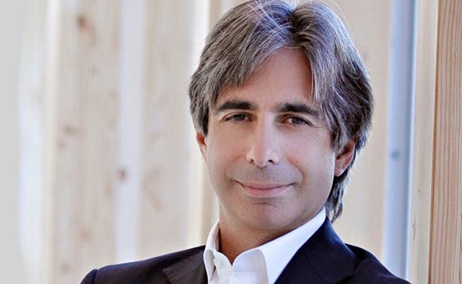 Gianluca Lazzi, PhD, MBA is the Fred H. Cole Professor and a Provost Professor of Ophthalmology, Electrical Engineering, Biomedical Engineering, and Clinical Entrepreneurship at the University of Southern California (USC). He founded and serves as Director of the USC Institute for Technology and Medical Systems (ITEMS), a joint initiative of the Keck School of Medicine and the Viterbi School of Engineering. His research focuses on medical applications of electromagnetics, including implantable devices, neuroengineering, wireless telemetry, antenna design, and liquid metal–based sensors. A major focus of his research group is on artificial retina systems, neurostimulation for cognitive disorders, and neurorestoration. Dr. Lazzi has held several leadership roles within IEEE, including President of the Antennas and Propagation Society (2022) and Editor-in-Chief of IEEE Antennas and Wireless Propagation Letters. He currently serves as Chair of the IEEE Antennas and Propagation Society Awards Committee. He is also a cofounder of Teveri, Inc., the first company commercializing stretchable, liquid metal–based fibers and electronic systems for smart clothing and medical, consumer, and defense applications. He is a Fellow of the IEEE, the American Institute for Medical and Biological Engineering (AIMBE), and the National Academy of Inventors (NAI).
Bioelectromagnetics at the Interface of Modeling, Experiments, and Applications
Prof. Micaela Liberti, Sapienza University of Rome – Italy
Bioelectromagnetics lies at the intersection of engineering, physics, and life sciences, playing a key role in biomedical technologies as well as in human exposure assessment and safety. This keynote will present recent advances in the field, focusing on the integration of multiscale numerical modeling, advanced experimental platforms, and real-world applications.
The talk will highlight emerging computational approaches for realistic electromagnetic interactions with biological systems, ranging from tissue-level dosimetry to cellular, subcellular, and molecular-scale models, discussed in close connection with experimental methodologies bridging simulations and biological observations.
Selected examples will illustrate how the synergy between modeling and experiments is enabling new insights into interaction mechanisms, supporting innovative biomedical applications, and strengthening the scientific basis for exposure assessment and safety guidelines.
By bringing together engineering tools and biological investigations, this presentation will outline current challenges and future opportunities in bioelectromagnetics, emphasizing the value of integrated approaches for both fundamental understanding and translational impact.
 Micaela Liberti, PhD, is an Associate Professor at Sapienza University of Rome in the Department of Information Engineering, Electronics, and Telecommunications. Her research focuses on biomedical applications and health protection related to electromagnetic fields, with particular emphasis on interaction mechanisms, multiscale modeling and microdosimetry, exposure system design, and experimental validation platforms.
She has been actively involved in the bioelectromagnetics community for over two decades, serving as lecturer and organizer of the Bioelectromagnetic School “Alessandro Chiabrera” in Erice since 2004. In 2025, she served as Director of the 11th course of the School, entitled “Advances in Electroporation-Based Therapy: From Principles to Clinical Applications,” held at the Ettore Majorana Centre for Scientific Culture in Erice, Italy.
She served as member of the Scientific Council of the European Bioelectromagnetic Association (EBEA) since 2008 and as its President from 2019 to 2021. From 2012 to 2016, she served as National Deputy Representative of the COST Action TD1104 on electroporation-based technologies and treatments.
Dr. Liberti is a member of the Scientific Expert Group of the International Commission on Non-Ionizing Radiation Protection (ICNIRP) and of the Technical Advisory Committee of URSI Commission K, serves on TC28 of the IEEE Microwave Theory and Techniques Society, and is currently President-Elect of the BioEM Society, assuming the role of President in June 2026.
Wearable Biomedical Sensor Systems for Remote Health Monitoring
Prof. Atif Shamim, King Abdullah University of Science and Technology (KAUST) – South Arabia
With the advent of wearable devices and the Internet of Things (IoT), there is a growing demand for sensing systems that are not only compact and wireless, but also flexible enough to conform to the human body or mount on non-planar surfaces. This shift has fueled innovations in materials, manufacturing, and circuit design that enable sensors to bend, and integrate seamlessly into clothing, skin patches, or everyday objects. At the same time, there is an increasing requirement for these systems to be ultra–low cost—low enough to be disposable—while still delivering clinically meaningful data.This talk will explore recent advances in wearable and flexible sensors for remote health monitoring, in particular covering topics like additive manufacturing technologies such as inkjet and screen printing to realzie these sensor systems. The ability to create inks for various sensing materials and then print them on unconventional mediums such as plastics, papers, and textiles has opened up a plethora of new sensing applications. In this talk, we presentg many examples, such as, a Bluetooth Low Energy (BLE) enabled skin temperature monitoring system, a smart bandage with detachable BLE wireless readout for chronic wounds monitoring, a wearable wireless ECG system, and a Lactate sensing system for fitness monitoring. The promising results of these designs indicate that the day when these low-cost sensors will be worn on a regular basis for remote health monitoring is not far off.
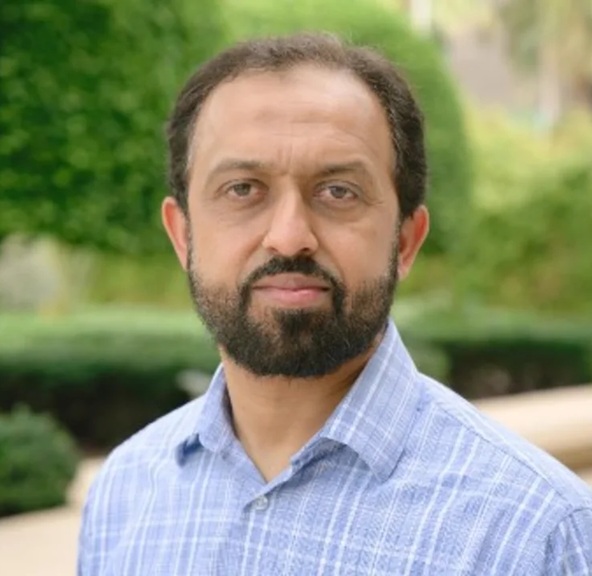 Atif Shamim received his MS and PhD degrees in electrical engineering from Carleton University, Canada in 2004 and 2009 respectively. He was an NSERC Alexander Graham Bell Graduate scholar at Carleton University from 2007 till 2009 and an NSERC postdoctoral Fellow in 2009-2010 at Royal Military College Canada and KAUST. In August 2010, he joined the Electrical and Computer Engineering Program at KAUST, where he is currently a Full Professor and Principal Investigator of IMPACT Lab. He was an invited researcher at the VTT Micro-Modules Research Center (Oulu, Finland) in 2006. His research work has won best paper awards in IEEE IMAS 2025, IEEE ICMAC 2025 and 2021, IEEE IMS 2016, IEEE MECAP 2016, IEEE EuWiT 2008, first prize in IEEE IMS 2019 3MT competition, IEEE AP-S Design Competition 2022 and IEEE MTT-S Design Competition 2024, finalist/honorable mention prizes in IEEE APS 2023, IEEE AP-S Design Competition 2020, IEEE IMS 2017 (3MT competition), IEEE IMS 2014, IEEE APS 2005 and R. W. P. King prize for journal papers in IEEE TAP 2017 and 2020. He has served as the Distinguished Lecturer for IEEE AP-S (2022-2024). He has won the Kings Prize for the best innovation of the year (2018) for his work on sensors for the oil industry. He was given the Ottawa Centre of Research Innovation (OCRI) Researcher of the Year Award in 2008 in Canada. His work on Wireless Dosimeter won the ITAC SMC Award at Canadian Microelectronics Corporation TEXPO in 2007. Prof. Shamim also won numerous business-related awards, including 1st prize in Canada’s national business plan competition and was awarded OCRI Entrepreneur of the year award in 2010. He is an author/co-author of 1 book, 3 book chapters and 400 international publications, an inventor on 40 patents and has given over 130 invited talks at various international forums. His research interests are in innovative antenna designs and their integration strategies with circuits and sensors for flexible and wearable wireless sensing systems through a combination of CMOS and additive manufacturing technologies. He is a Fellow of IEEE, founded the first IEEE AP/MTT chapter in Saudi Arabia (2013) and is currently serving as the Editor-in-Chief of IEEE Journal of Electromagnetics, RF and Microwaves in Medicine and Biology (J-ERM). He has previously served on the editorial board of IEEE Transactions on Antennas and Propagation (2013-2019), IEEE J-ERM (2020-2024), and as a Guest Editor for IEEE AWPL Special issue (2019). He is currently the AdCom member for IEEE AP-S, Founding Chair of IEEE AP-S TC-8 (wireless Communication), Vice Chair of IEEE APS MGA Committee, member of IEEE APS Fellows committees and leads the student travel grants committee. He has previously served on IEEE TC on Antenna Measurements (AP-S), Microwave Controls (MTT-S 13), and Additive Manufacturing (CRFID).
From Vital Signs Sensing to Assisted Mobility: Radar Technologies to Shape the Future of Assistive and Biomedical Systems
Dr. Giulia Sacco, CNRS, Rennes – France
…
 Giulia Sacco received the M.S. degree (summa cum laude) in biomedical engineering and the Ph.D. (cum laude and with the Doctor Europaeus label) in information and communication technology from Sapienza University of Rome, Rome, Italy, in 2017 and 2021, respectively. She is currently a Researcher with the Institut d’Électronique et des Technologies du numérique/French National Center for Scientific Research (CNRS), Rennes, France and the vice-president of the URSI France Commission K.
She was a Visiting Researcher with Stiching imec Eindhoven, The Netherlands from April 2019 to September 2019. Her scientific and research interests include the field of innovative biomedical applications of electromagnetic fields and radars for vital signs monitoring.
Dr. Sacco was the recipient of an STM Fellowship from BioEM society, a “Young Scientist Award” at the XXXV General Assembly and Scientific Symposium (GASS) of the International Union of Radio Science (URSI) 2023, a “2022 Antennas and Propagation Society (AP-S) Fellowship “, a “Bourse de jeunes chercheurs” Grant at the XXXIV URSI GASS 2021, the Best Student Paper Award at the XXXIII URSI GASS 2020, and the Best Student Paper Award at Photonics & Electromagnetics Research Symposium (PIERS) 2019. In co-authorship with his students and collaborators her work was also awarded with the second prize Student Award at BioEM 2025, and the first prize Student Award at URSI AT-RASC 2024 and IEEE International Microwave Biomedical Conference (IMBioC) 2022.